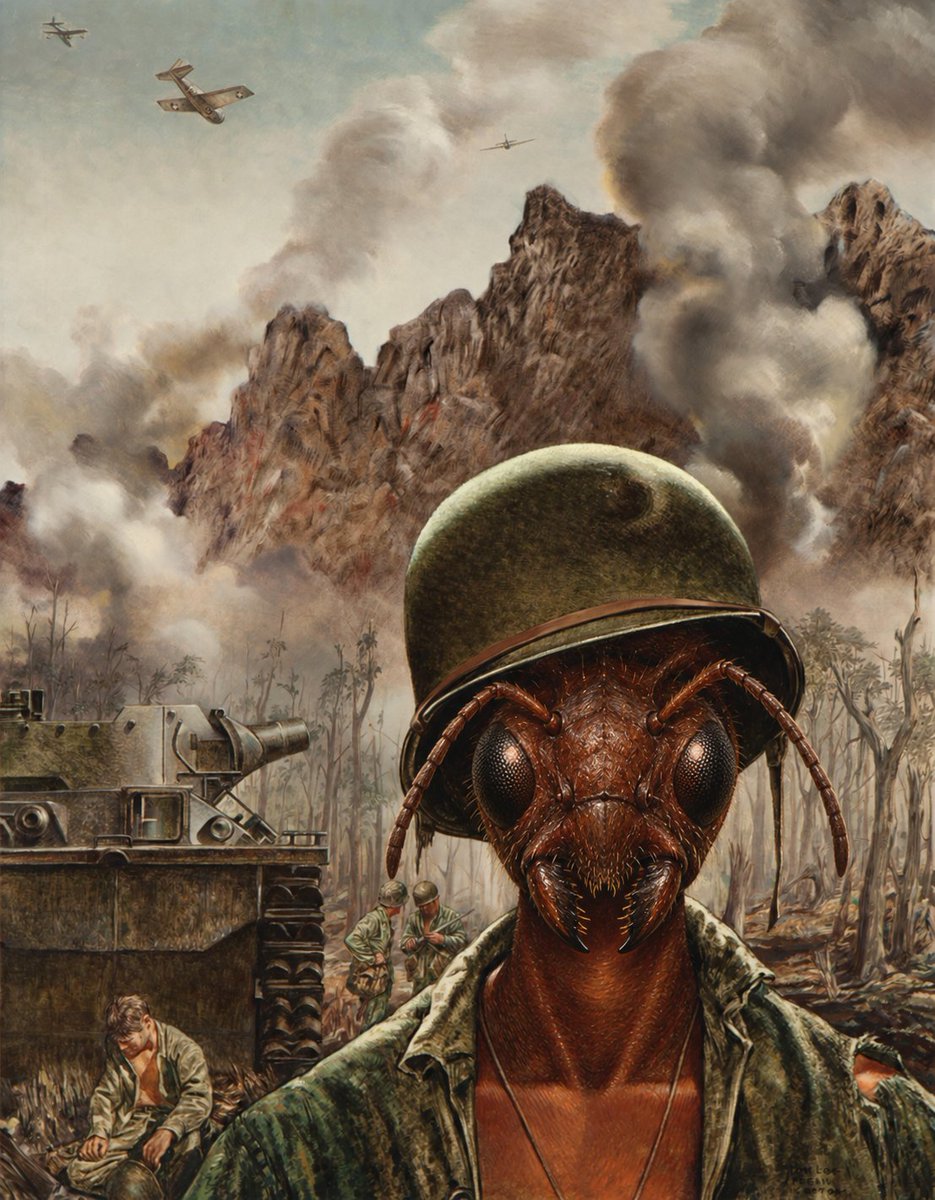
North of San Diego, in the hills around Lake Hodges, there is a war. It has no generals, no flags, and no exit strategy. It does have a body count, and the body count is enormous. On the border between two rival Argentine ant supercolonies, an estimated 30 million ants die every year, on a front line that stretches for miles.
30 million a year. Do the math and that's roughly one dead ant per second, every second, forever. You've lost about forty ants since you started reading this. Nobody sent flowers.
Meet the Combatants
In one corner: the Very Large Colony. That is its real, scientific name. Somebody with a PhD looked at it and said, "You know what? That's the name. YOLO." And they were right, because it covers territory from San Diego to beyond San Francisco and may hold around 1 trillion ants. 1 trillion. That's not a colony, that's a voting bloc.
In the other corner: the Lake Hodges Colony, a much smaller supercolony parked right on the Very Large Colony's doorstep, north of San Diego. Think of it as Liechtenstein, if Liechtenstein were surrounded by France and France was made of a trillion tiny furious Frenchmen.
And they aren't alone. 5 Argentine ant supercolonies are known to exist in Southern California, which makes the region less of a neighborhood and more of a Game of Thrones map.
How Did Everybody Get Here?
Argentine ants are, as the name gently suggests, from Argentina. The first one recorded in the United States turned up in Louisiana in 1891. From there they made their way west, and when they reached California roughly a century ago they spread widely because there were no other Argentine ants to stop them.
Researchers believe the separate Southern California supercolonies came from separate introductions, possibly riding in the soil of imported plants. So somewhere back in the day some person bought a ficus and it started one of the deadliest wars ever recorded.
Why They Hate Each Other (Science Version)
Quick rule of thumb, because this is where people get lost. Ants in the same supercolony are teammates: they don't fight each other at all, even across hundreds of miles. A Very Large Colony ant from Ventura can wander into a Very Large Colony nest in Oceanside and get treated like family. Ants from different supercolonies are enemies, and clashes between them happen commonly along their territorial borders.
The Very Large Colony and the Lake Hodges Colony are two different supercolonies. Same species, different team. So how does an ant know which team it's on? Genetics. A UC San Diego team found that ants within one supercolony were genetically very similar across huge distances, but genetically distinct from ants in neighboring supercolonies. Low genetic diversity inside each colony is what lets it get massive and peaceful. The genetic differences between colonies are what start the war at the border. Same species, same state, same climate. Different family tree. Absolute mortal enemies. It's basically Thanksgiving.
The Fighting Never Stops. Literally.
How we came upon this war was that in 1997 UC San Diego scientists watched Argentine ants from different colonies fight, and then in 2004 they began mapping the borders where the San Diego supercolonies clash. During one 6 month field study, researchers estimated that border skirmishes around the Lake Hodges colony killed at least 15 million workers (ants, not people). 6 months. 15 million. That's quite a turf war.
What really separates this conflict from normal ant drama is the schedule. Most ant species fight in raids that last a few hours or skirmishes that pop up for a few weeks. Argentine ants clash ceaselessly. It is non-stop mayhem and death. Their borders are zones of constant violence, and battles can be fought on top of hundreds of dead ants.
The only thing known to call a timeout? Bad weather, like rain. Which, in San Diego, means the ceasefire happens about four times a year.
Meanwhile, the Very Large Colony Has International Friends
If you think the Lake Hodges Colony is outgunned locally, wait. In 2009, researchers led by Eiriki Sunamura of the University of Tokyo found that Argentine ants in Europe, Japan and California share a strikingly similar chemical profile and refuse to fight each other. Put a California ant next to a European ant and they act like old friends.
For scale, the European supercolony stretches about 6,000 km (3,700 miles) along the Mediterranean, while the "Californian large" runs about 900 km (560 miles) down the California coast. A follow-up study concluded that the world's largest introduced Argentine ant populations are likely descended from the same ancestral colony.
So the Very Large Colony isn't just big. It has a passport, allies on three continents, and a family reunion that spans an ocean. The Lake Hodges Colony has Lake Hodges.
What's Next?
More fighting. Somewhere in North County San Diego right now, on ground made of fallen soldiers, two colonies descended from the same South American species are doing the exact thing they've been doing since at least the 1990s, when scientists first started writing it down: fighting. No treaty. No UN. No end in sight. Just one dead ant per second (except if it rains, then we're on weather delay, but blue tarp isn't rolled out).
So next time you see a line of tiny brown ants in your kitchen, be nice. They might be on leave.